


In the ever-evolving landscape of cybersecurity, staying one step ahead of malicious actors is an ongoing battle. To defend against cyber threats effectively, it's crucial to understand the tools and techniques used by both attackers and defenders. Metasploit, a powerful penetration testing framework, is one such tool that plays a significant role in this digital chess match.
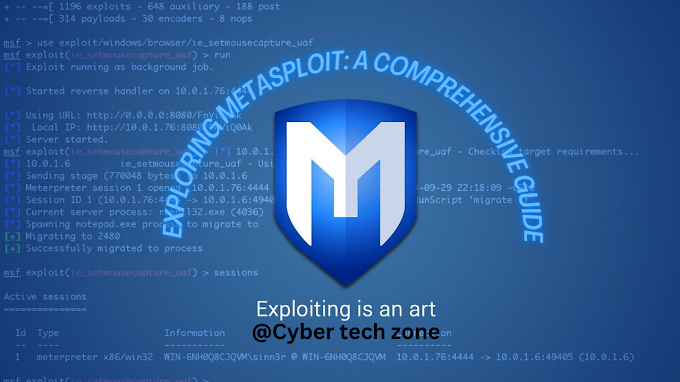
In this comprehensive guide, we will delve into the world of Metasploit, exploring its origins, capabilities, ethical applications, and its impact on the cybersecurity community.
What is Metasploit?
Metasploit is an open-source penetration testing framework that empowers security professionals, ethical hackers, and red teamers to test and assess the security of computer systems, networks, and applications. It was developed by H.D. Moore in 2003 and is now maintained by Rapid7, a leading cybersecurity company.
At its core, Metasploit provides a vast collection of exploits, payloads, and auxiliary modules designed to identify, exploit, and mitigate vulnerabilities in a wide range of target systems. The framework's flexibility, extensibility, and robustness have made it a staple in the arsenal of cybersecurity professionals worldwide.
The Metasploit Ecosystem
Metasploit is more than just a single tool; it's a comprehensive ecosystem with several key components:
1. Framework:
The Metasploit Framework is the heart of the ecosystem. It includes a command-line interface (CLI) and a graphical user interface (GUI) that allows users to interact with its extensive feature set. The framework provides tools for exploit development, payload generation, post-exploitation, and more.
2. Metasploit Pro:
Metasploit Pro is the commercial version of Metasploit, offering advanced features like integration with other security tools, reporting, and automation. It's designed for organizations and security professionals who need robust penetration testing capabilities.
3. Metasploit Community:
This is the free, community-supported version of Metasploit, which provides essential penetration testing capabilities. It's a great starting point for those looking to explore Metasploit without committing to the Pro version.
4. Metasploit Framework Modules:
Metasploit Framework comes with a vast collection of modules, including exploits, payloads, encoders, and post-exploitation modules. These modules are the building blocks for crafting and executing attacks.
5. Metasploit Database:
The database component helps users store information about targets, vulnerabilities, and the results of various assessments. This feature enhances the efficiency of penetration testers by maintaining a record of past tests and findings.
How Does Metasploit Work?
Metasploit follows a systematic approach to penetration testing:
1. Information Gathering:
The first step in any penetration test is gathering information about the target system, such as its operating system, services, and potential vulnerabilities. Metasploit provides a range of tools and modules for this purpose, helping testers identify potential weaknesses.
2. Vulnerability Scanning:
Metasploit can conduct vulnerability scans to identify known vulnerabilities in the target system. This information is crucial for selecting the appropriate exploits and payloads.
3. Exploitation:
Once vulnerabilities are identified, Metasploit can attempt to exploit them using various exploits and payloads. Exploits are modules that take advantage of specific vulnerabilities, while payloads are code that runs after successful exploitation.
4. Post-Exploitation:
After gaining access to a target system, Metasploit provides a suite of post-exploitation modules to gather information, maintain access, and carry out various tasks on the compromised system.
5. Reporting:
Metasploit offers reporting tools to document the findings of the penetration test comprehensively. This is essential for organizations to understand their security posture and prioritize remediation efforts.
Metasploit in Ethical Hacking and Penetration Testing
Metasploit is a valuable tool for ethical hackers and penetration testers, as it allows them to identify and address vulnerabilities in a controlled and systematic manner. Here are some key applications of Metasploit in ethical hacking and penetration testing:
1. Vulnerability Assessment:
Security professionals use Metasploit to scan systems for known vulnerabilities, helping organizations prioritize patching and mitigation efforts.
2. Exploit Development:
Metasploit enables researchers to develop and test new exploits for emerging vulnerabilities, contributing to the overall security of the digital ecosystem.
3. Red Team Operations:
Red teams, often employed by organizations, use Metasploit to simulate real-world attacks and assess the effectiveness of their security measures.
4. Security Awareness Training:
Metasploit can be used in security awareness training to educate employees about the potential threats they may encounter and how to recognize and respond to them.
5. Compliance Testing:
Organizations subject to regulatory requirements often use Metasploit to ensure compliance with security standards and regulations.
Ethical Considerations and Responsible Use
While Metasploit is a powerful tool for cybersecurity professionals, it can also be misused for malicious purposes. Ethical considerations and responsible use are paramount when using Metasploit or any other penetration testing tool. Here are some guidelines:
1. Obtain Legal Authorization:
Never use Metasploit or any penetration testing tool without explicit legal authorization. Unauthorized testing can lead to serious legal consequences.
2. Limit Scope:
Clearly define the scope of your testing and ensure that it aligns with the authorization you've received. Avoid targeting systems or networks that are not part of the agreed-upon scope.
3. Use It for Defensive Purposes:
Metasploit should be used to assess and improve security, not to cause harm or disruption. The goal is to identify and remediate vulnerabilities, not exploit them for malicious gain.
4. Always Maintain Ethics:
Adhere to ethical guidelines and principles, even when conducting penetration tests. Respect privacy, confidentiality, and the rights of individuals and organizations.
5. Document and Report Findings:
Properly document your testing process, findings, and any actions taken. Provide clear and actionable recommendations to the organization being tested.
The Evolving Threat Landscape
The world of cybersecurity is in a constant state of flux. New vulnerabilities and attack techniques emerge regularly, challenging security professionals to adapt and innovate. Metasploit's success and longevity can be attributed, in part, to its ability to evolve and keep pace with the changing threat landscape.
1. Regular Updates:
Metasploit is continuously updated with new exploits, payloads, and modules to address emerging vulnerabilities and attack vectors.
2. Community Contribution:
The Metasploit community plays a vital role in its development by contributing modules, exploits, and improvements. This collaborative effort ensures that Metasploit remains effective and relevant.
3. Integration with Other Tools:
Metasploit's open architecture allows for integration with other security tools and frameworks, enhancing its capabilities and adaptability.
Conclusion
Metasploit is a formidable tool in the hands of cybersecurity professionals, providing them with the means to identify and mitigate vulnerabilities in computer systems, networks, and applications. Its impact on the cybersecurity community is undeniable, as it continues to evolve and adapt to the ever-changing threat landscape.
However, with great power comes great responsibility. Ethical considerations and responsible use of Metasploit are crucial to ensure that it remains a force for good in the fight against cyber threats. When used for ethical hacking and penetration testing, Metasploit can be a powerful ally in enhancing digital security and safeguarding


.png)
.png)
_11zon.jpg)
_11zon.jpg)